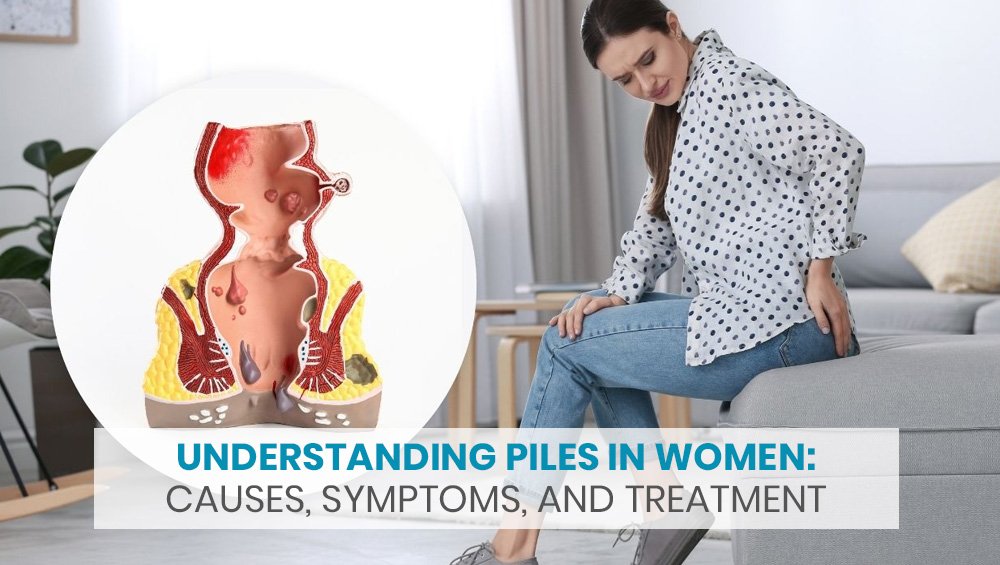
Did you ever get that itchy or sore feeling around your back passage, but just ignored it as nothing? That is what many women do until it gets to the point of hurting too much to be ignored. These unwelcome symptoms are usually piles also referred to as female haemorrhoids. While it is a very common condition, most women are hesitant to discuss it freely.
This blog is for any woman who is interested in understanding the meaning behind piles and how they begin and what symptoms to look for, and what procedures like piles surgery may help bring relief. If you've been uncertain or battling with discomfort, this blog is a simple guide to read."
What Exactly Are Piles in Women?
In simple language, piles are inflamed veins within or around the anus and rectum. Just imagine varicose veins, but in a more delicate region. Due to pressure, these veins get inflated, and sitting, defecation, or even walking at times becomes painful or scratchy.
Female piles can be of two general types:
- Internal piles: within the rectum and not normally visible.
- External piles: near or around the anus, and one can both see and feel them.
Women might have one or both of them, and the level of discomfort is determined by how bad they feel.
Causes of Piles in Females
Women's bodies go through a lot between pregnancy and periods, and menopause. These changes can place extra pressure on the stomach and rectum. And often, this is the reason for piles.
Here are some common reasons that females have piles:
- Pregnancy: The uterus grows, and hormonal fluctuations can delay digestion and create strain on the rectal veins.
- Constipation: Stool passing is among the most often identified reasons for piles.
- Long sitting periods at a desk or in the toilet could make matters worse.
- Obesity: Body weight that is too heavy places pressure on the pelvic veins.
- Hormonal changes: The hormones of women can affect digestion and bowel movements.
- Diets that are low in fiber: If you don't eat fruits, vegetables, or fiber in food, the stool becomes tougher, and you exert more pressure on your.
When all of these factors are combined and they cause the veins around the anus to enlarge and become painful, leading to female hemorrhoids.
Early Signs and Symptoms of Piles in Females
Most women disregard the early warning symptoms because they believe it's just indigestion or irritation. But being aware of the symptoms of piles in women early can spare you from a lot of pain. Common symptoms of piles are
- Burning, itching or pain in the area of the anus
- Pain during passing stool
- Bright red blood during or after a bowel movement
- Small lump near the anus
- Feeling your bowel is not empty
- Swelling of the anal area
If all these symptoms of piles in women ring a bell, don't wait. The sooner you seek assistance, the simpler it becomes.
Why Piles Are Common in Women
Women's bodies are programmed to cope with dramatic changes during pregnancy, giving birth, and hormonal changes, but these same changes sometimes cause piles.
During pregnancy, for example, the expanding baby puts pressure on the veins in the pelvis. Add that to constipation and slowing of digestion by hormones, and piles seem almost unavoidable.
Even post-childbirth, some women still suffer from female hemorrhoids due to relaxed pelvic muscles and straining during delivery.
How Piles Are Diagnosed
A short visit to a qualified doctor is all you need. They'll typically inquire about your health concerns and also your lifestyle and diet. Sometimes, a quick physical exam or a clear internal examination confirms the diagnosis.
When the stomach piles appear inside the rectum, a doctor might recommend a simple test referred to as a proctoscopy. It's a procedure to check the rectum. It's quick and safe, no need to be worried about.
Recovery After Piles Surgery
It is dependent on the degree of the piles, however, the healing speed is faster when you undergo laparoscopic surgery. Most women feel relief in a couple of days.
Some practical tips for recovery:
- Eat light, fiber-rich foods
- Clean and dry the area
- Avoid heavy lifting
- Take medications on time
- Persist in following up with your doctor regularly
Preventing Piles in Women
The thing that the majority of people overlook is prevention. You can stay clear of discomfort by implementing these easy habits:
- Avoid straining during passing stool
- Be physically active and at a healthy weight
- ADD fiber and fluids to your diet every day
- Avoid sitting for long hours
- Control stress (it has more impact on digestion than you realize)
These tiny lifestyle changes go a long way in maintaining your digestive health and a piles-free status.
Role of a Laparoscopic Surgeon in Gurgaon
A laparoscopic physician in Gurgaon treats a case of piles using advanced technology, including small cameras to visualize and treat the problem accurately. The procedure is brief, there’s hardly any bleeding, and for the most part, you’ll be able to go home the same day.
So many women prefer this method because it allows them to return to their normal routine, be it work, family life, or simply everyday life, much quicker and much easier.
Final Thoughts
Feeling uncomfortable and rather annoyed? Piles are treatable. Whether by way of lifestyle changes, medications, minimally invasive procedures, or surgery (piles), who wouldn’t want some relief for their piles and get back to feeling like oneself again?
If you notice any indications of a puddle on females, you need to be aware of these indications. Consuming a balanced diet high that is rich in fiber, drinking enough water, and generally taking regular care of your health can result in an improvement. If it gets more severe and you are concerned, seek out your doctor. Dr. Vikram Aryan is the most effective laparoscopic surgeon in Gurgaon with more than 18 years of expertise. He will assist you in safely recovering your health.
And most importantly, don’t sit in pain and misery; piles can be safely treated, and in-between care consistently discussed and appreciated in consultation. Sometimes it may be an emotional challenge as much as a physical one - but with awareness and attention, the emotional and physical can truly be managed, and relief can happen, returning to comfort.